
NFC vs QR: which is safer for your business?
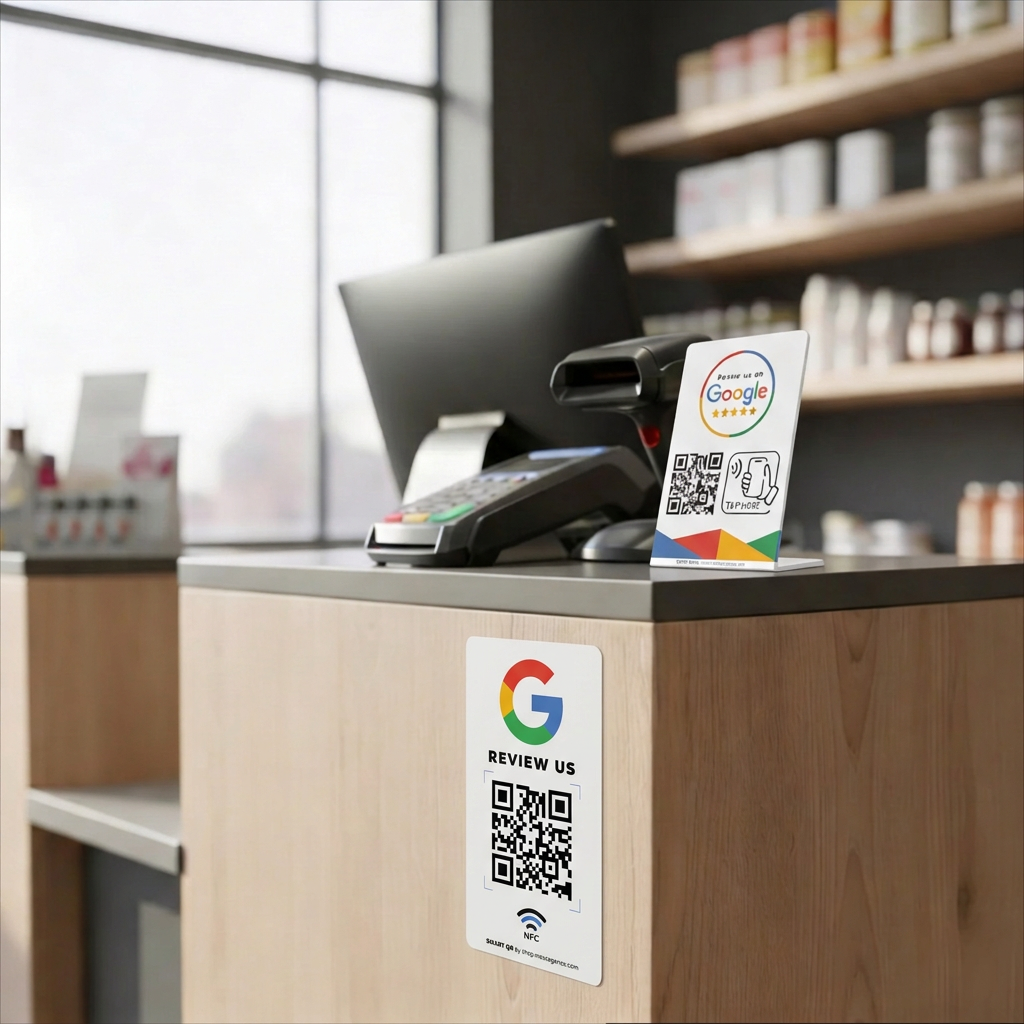
There's a growing number of fake QR code scams hitting physical businesses: someone sticks a fraudulent label over the original, redirecting your customers to a website that has nothing to do with you — sometimes straight into a scam. Spain's Policía Nacional has warned about this type of fraud, which is already affecting shops, restaurants and car parks across the country.
Why is QR vulnerable?
A QR code is, above all, a printed image. Anyone can photograph it, generate a new one pointing elsewhere, print it out and stick it over the original in a matter of seconds. Neither you nor your customer will notice until it's too late.
How NFC technology works
NFC (Near Field Communication) is a physical chip built into the card, sticker or stand. It's not an image — it's an electronic component locked against external writing, so nobody can "hack it" by sticking something on top the way they can with a printed QR. The customer doesn't scan anything — they simply tap their phone and go straight to the configured destination.
A bonus: the destination isn't set in stone
With many NFC providers, once you set the chip's destination it's fixed for good: if you want to change it, you have to replace the entire product. At Messagenes, both the NFC and the backup QR are linked to a dynamic link you can reconfigure whenever you like from your phone, without touching or replacing the physical product. It's not the main reason to choose NFC, but it's a plus you'll appreciate over time.
Messagenes' solution: the best of both worlds
Our products use NFC as the primary technology, with a backup QR code for the few phones that don't yet have NFC enabled. That way you get all the convenience of QR without the risk of someone tampering with it.